
The Studio Notes Blog
Stories and musings on being an artist.Categories:
Art School | Being an Artist | Collecting & Display | Inspiration | In Studio | Sketchbook

DIY Floater Frame for Artwork
Using a mitre box and my measurement for the inside corner of the frame, I cut a length of the corner moulding with a 45 degree angle on either end. After testing it against the painting to see that it was the correct length, I used this first length as the template for the other 3 lengths. Once all four pieces were cut to length, it was time to glue the frame together.

The Quickest Way Forward
I make plenty of artwork that if not exactly bad, is unresolved, or in other words not good enough to call finished. I can’t make it “good” or, most often, I lose interest in trying to solve the problems with it to make it good.
Sometimes, when a painting just isn't working, there's no point in fighting it. A dramatic shift is required to move things forward.
This is a story about how I did just that.

Crisp and Clean
Making art is messy.
When I paint on deep wood panels I usually dribble paint or other media down the sides when I’m working. This is part of the artmaking process, I know, but when a painting is completed, I like the sides to be dribble free, preferring instead a tidy and uniform finish.

What’s in a Name? Choosing Titles for Artwork
When adding a title to a painting or a series of paintings, my goal is to add to the experience of viewing the work without giving it a literal explanation. I want to leave space in the naming for a viewer to bring their own interpretation to what they are seeing. This is why I often fix on a word or phrase that lends a little mystery to the work.

Are We There Yet? Knowing When a Painting is Finished
Knowing when a painting is finished is a question that I’ve been thinking about for some time, especially since my current interest is in expressing myself through making abstract imagery.
After the first few passes on a painting, it’s simple enough to know that it isn’t finished because, well it's only the beginning. Then as more marks and materials accumulate on the surface of the painting, it's a much more difficult question.

Small Works of Wonder
I started making mini paintings by chance when I was participating in my first art market. Each artist was asked to donate something reflective of their practice to be used as a draw item. I had some older work on paper that I cut down and mounted on cards, and along with their envelopes, I wrapped up five of these one of a kind greeting cards into a little bundle as my donation.
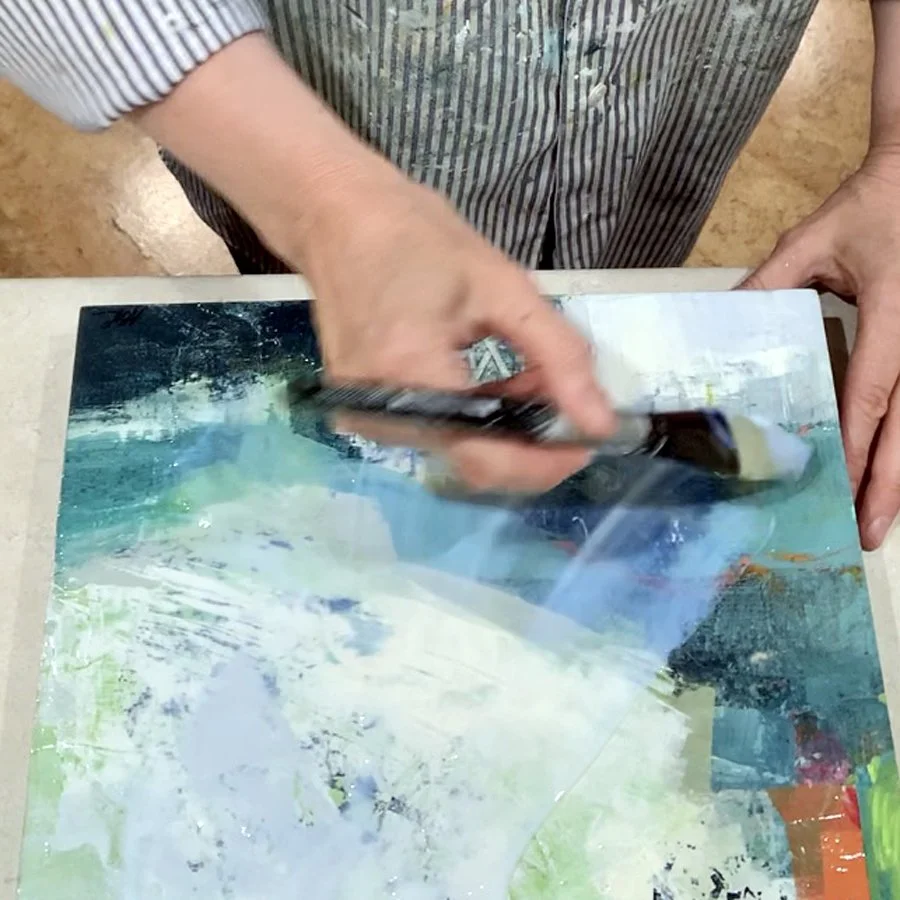
Finishing and Varnishing an Acrylic Painting
I love the finishing stages of making an acrylic painting, preparing it for a life outside of the studio. There are so many decisions to be made while in the midst of making art. That’s why I enjoy the finishing process so much. It’s a pleasure to switch from decision making to task mode where few decisions are required.
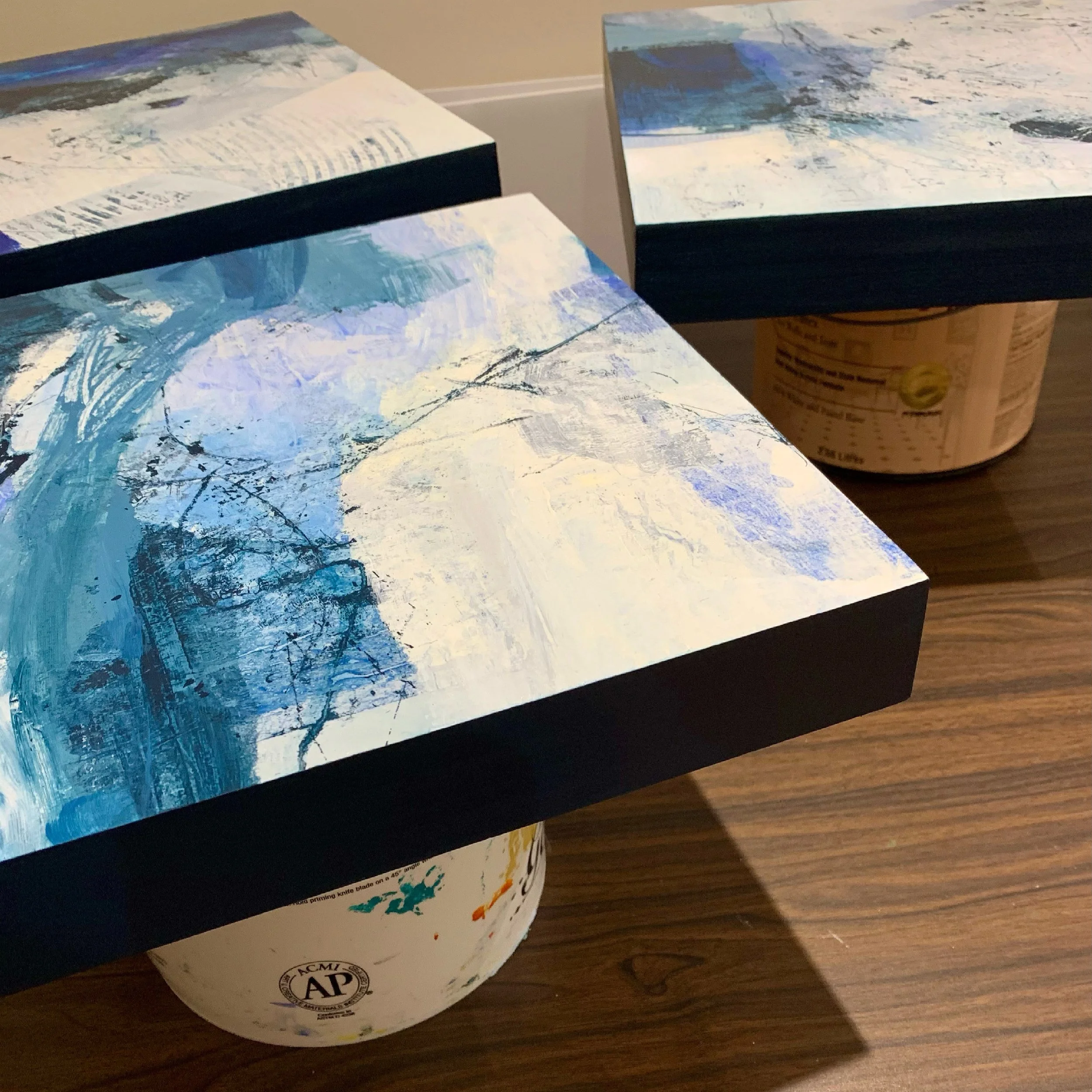
To Paint, or Not to Paint (Edges), That is the Question.
I had an art teacher once that disdained painted edges on a painting. I’m not exactly sure why but I suspect it had something to do with the idea that whatever incidental paint or other material was left on the side of the panel or canvas was evidence of the process of making the painting.
While this is true, it just doesn’t work for me.