
The Studio Notes Blog
Stories and musings on being an artist.Categories:
Art School | Being an Artist | Collecting & Display | Inspiration | In Studio | Sketchbook

Going Frameless: Art on Paper in Your Home
So you’ve just acquired an original artwork on paper. Congratulations!
A beautiful custom frame can truly elevate the look of your new work on paper in your home. It can also be quite costly. There are, however, alternatives for displaying works on paper in your home without incurring the expense of framing.

Crisp and Clean
Making art is messy.
When I paint on deep wood panels I usually dribble paint or other media down the sides when I’m working. This is part of the artmaking process, I know, but when a painting is completed, I like the sides to be dribble free, preferring instead a tidy and uniform finish.

What’s in a Name? Choosing Titles for Artwork
When adding a title to a painting or a series of paintings, my goal is to add to the experience of viewing the work without giving it a literal explanation. I want to leave space in the naming for a viewer to bring their own interpretation to what they are seeing. This is why I often fix on a word or phrase that lends a little mystery to the work.

Building an Art Studio Painting Wall
It was my builder who suggested we build the wall out of pegboard rather than plywood. Doing so would allow me many options to easily rearrange my paintings in progress on hooks, at just about any height and any configuration. The pegboard is 4’ wide, so we used that dimension for the height of the wall with the bottom edge of the painting wall 33” from the floor.
My Unfinished 100 Day Project
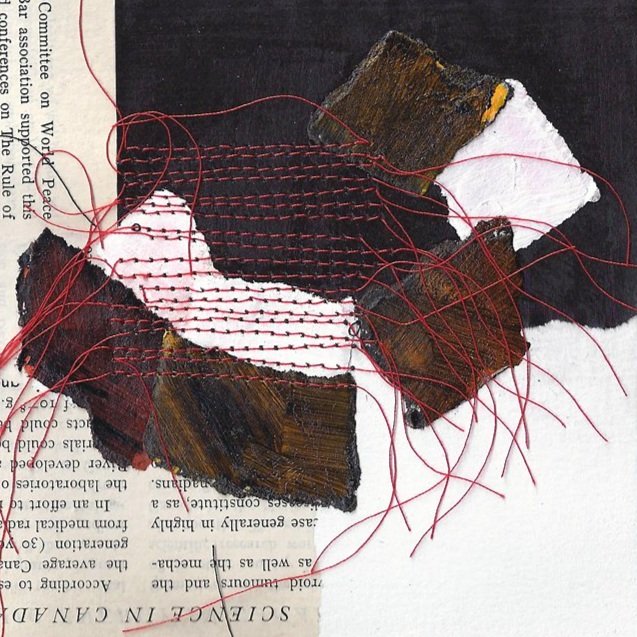
As the days progressed, I recognized in myself a tendency to try to “make art”. I lost sight of just making for the simple pleasure of it and having the “art” be a byproduct of the making process.

Are We There Yet? Knowing When a Painting is Finished
Knowing when a painting is finished is a question that I’ve been thinking about for some time, especially since my current interest is in expressing myself through making abstract imagery.
After the first few passes on a painting, it’s simple enough to know that it isn’t finished because, well it's only the beginning. Then as more marks and materials accumulate on the surface of the painting, it's a much more difficult question.

Sixty Squares
What I learned from this project, so early in my art education, was that making the work is what propels creativity. Even when I felt at a loss for ideas, pushing ahead with doing the work generated information to help me. I was excited by the prospect of not knowing where the creative process would take me, nor could I have predicted beforehand the destination.
Discovering Inspiration for The 100 Day Project
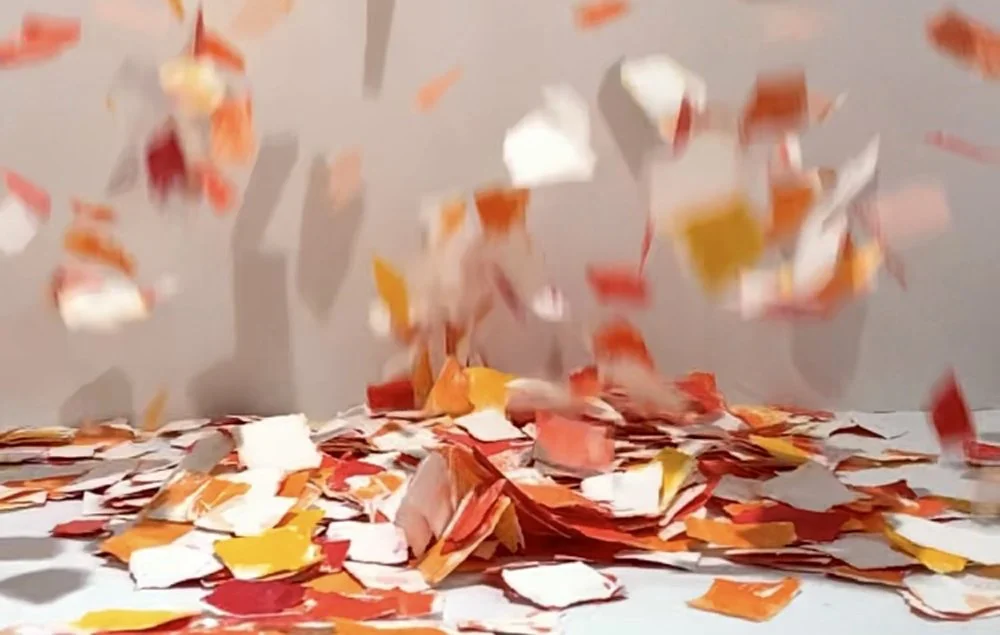
I found a collection of small pieces of paper that I used in another project that had been languishing on a shelf for years. Imagine a fishbowl, just the right size for one little goldfish, filled almost to the top with scraps of torn paper all about 1” square. Each square is painted either yellow, orange or red on one side. Imagine that there are several hundred of these little goldfish coloured squares.

New Year, New Start, New Word
My word for the year is abundance. With every choice that I make with my art I want to have this word, abundance, informing my decisions. For me, abundance means to make more work, work that is finished or not, it doesn’t really matter. My word of the year also means that the work is larger to my previous work, both in volume and in scale.
Looking Back Before Looking Ahead
Aside from the hustle and bustle of the holiday season, the shopping and celebrating, December seems to bring with it the need to look back on the waning year, to reflect on what has been, before looking toward the new year to come. So it’s with this spirit that I write about my art year in 2021.

Small Works of Wonder
I started making mini paintings by chance when I was participating in my first art market. Each artist was asked to donate something reflective of their practice to be used as a draw item. I had some older work on paper that I cut down and mounted on cards, and along with their envelopes, I wrapped up five of these one of a kind greeting cards into a little bundle as my donation.

The Time I Made a Turkey From a Potato
In Canada, Thanksgiving arrives in October. The second Monday of the month to be exact. It is the day we celebrate the harvest and the changing colours and give thanks for all that we have. The traditional celebratory meal for this holiday is turkey with all of the fixings: potatoes, dressing, cranberry sauce and gravy . When I was a very young girl I made a turkey for Thanksgiving using a potato.
Finishing and Varnishing an Acrylic Painting
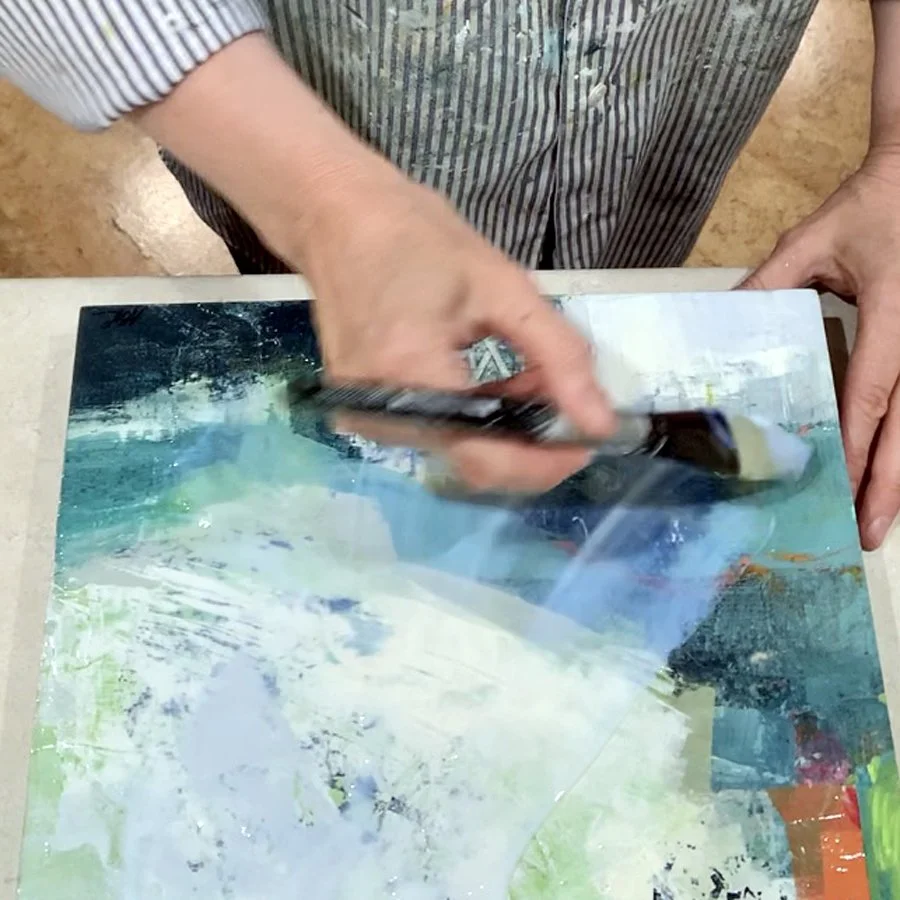
I love the finishing stages of making an acrylic painting, preparing it for a life outside of the studio. There are so many decisions to be made while in the midst of making art. That’s why I enjoy the finishing process so much. It’s a pleasure to switch from decision making to task mode where few decisions are required.

Finding Inspiration
There have been very few times, as an artist, that I can pinpoint when and where inspiration informs my art practice. Usually, when I begin a new series of work, it's the materials that drive the process, the paint and paper and mark making tools. Recently though I was struck by the most ordinary of objects as a source of inspiration...beach stones.

Collecting the Bits and Bobs
Recently I made a start on cleaning up and sorting out my studio, a task that I undertake a few times a year after the end of a productive period of making. Cleaning up and sorting through my materials helps me to move from one project to the next and I often find little treasures of material that help to inform the next series of work. This time I had a lot of scraps of collage paper lying around.

My Goal is Simple: Take Good, Well Lit Images of My Artwork In Situ
As I begin to show my artwork more consistently to an online audience, I’ve come to realize that having in situ images is an important part of showing my artwork. It’s the best way to show the scale and dimensionality of a painting and to display to collectors how it might appear in their own home. And since I just completed and varnished a series of paintings I thought I would give it a try.

Five Takeaways from My 100 Day Sketchbook Project
My 100 Day Sketchbook Project began back on January 31st with the aim of developing a sketchbook practice that would inform my art practice going forward. Now here we are on May 10th, 100 days later, and what I know for sure is that I learned a few things along the way.

The First 50 Days and Counting
The first half of the project was intuitive and I really liked making 15 minute sketches during those first 50 days. As anticipated there wasn’t much time for thinking or judging my work so I just let my hands lead the way. It was really fun working this way. But now it’s time to move to the second phase of this project. It’s time to assess what I have, and to rework each sketch with fresh eyes and with new intentions. It’s time to really look at what I have and to decide what resonates with me.
Letting the Work Inspire the Work
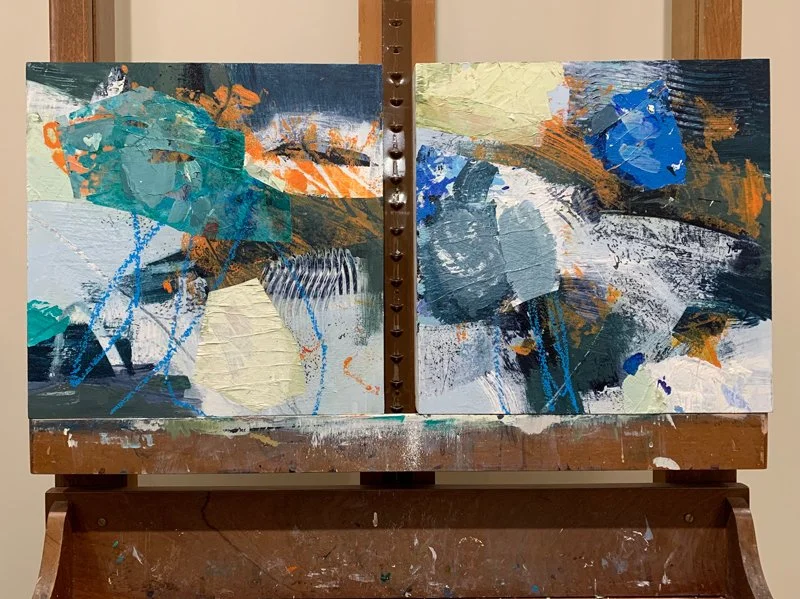
As sometimes happens, there were two outliers that were never going to work as part of this series. They were both becoming so laboured and the good parts were becoming too precious to me that I found myself painting around them to preserve what was there. I felt immobilized by indecision every time I wanted to work on them so I found myself avoiding them altogether. To be completely honest, I began to really dislike them. I recognize this feeling. I’ve been here before.
To Paint, or Not to Paint (Edges), That is the Question.
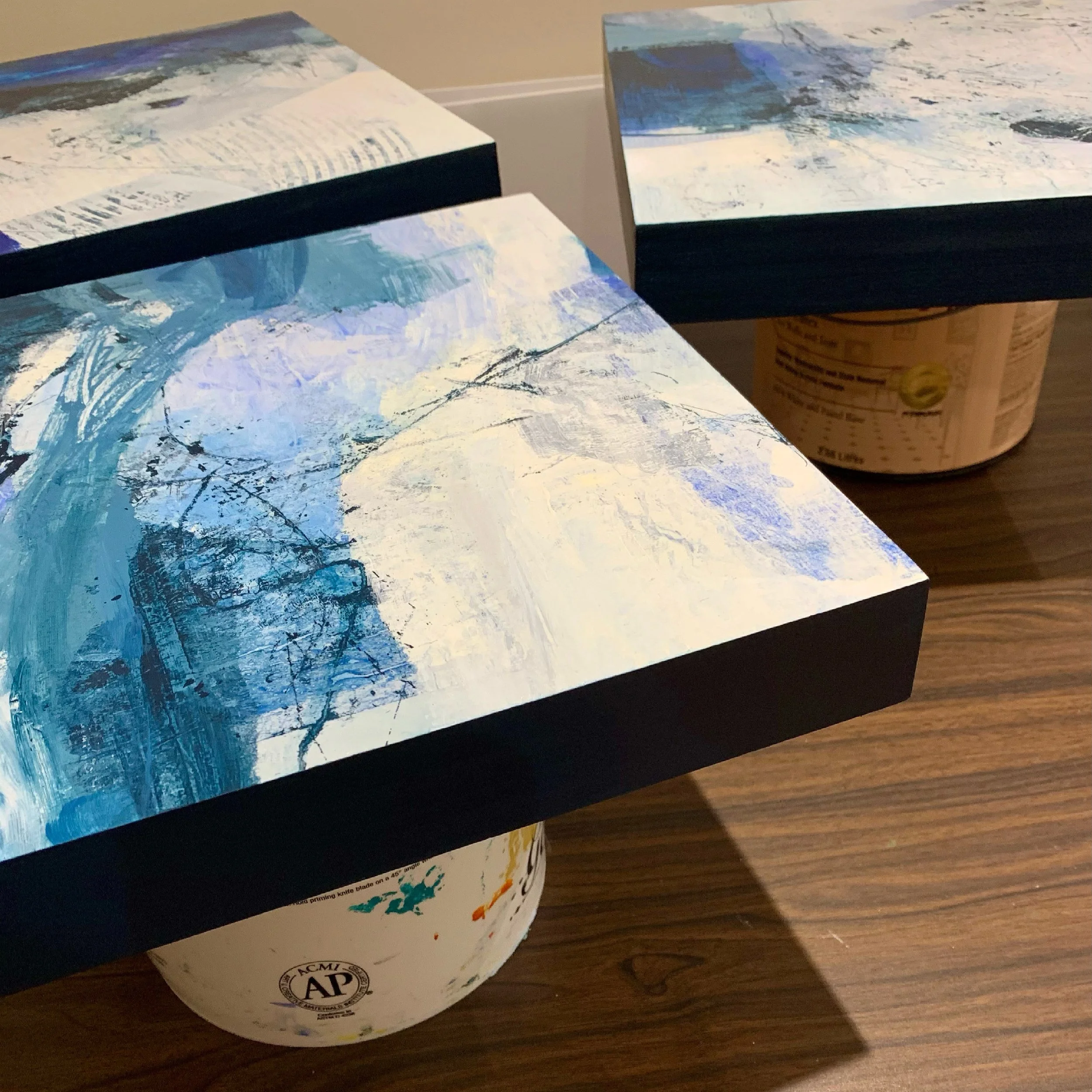
I had an art teacher once that disdained painted edges on a painting. I’m not exactly sure why but I suspect it had something to do with the idea that whatever incidental paint or other material was left on the side of the panel or canvas was evidence of the process of making the painting.
While this is true, it just doesn’t work for me.